
Essential Guitar Care Products Worth The Investment
A guitar is an instrument made of wood-and-metal that lives in a world of changing humidity, sweaty hands, dust, and daily wear. Fortunately, it is not necessary to have a full workshop to maintain the functionality and appearance of your prized instrument. A few reliable essentials will prevent most common problems, protect the finish, and make every session feel better.
1. A Hygrometer + Humidity Control
If there is one “invisible” issue that ruins guitars, it is bad humidity.
- Why it matters: Wood expands and contracts as humidity changes. Too dry can lead to sharp fret ends, cracks, and acoustic tops sinking. Too humid can cause swelling, high action, and glue issues.
- Who needs it most: Acoustic guitar players, anyone who live in climates with big seasonal swings, and players who travels to different climates with their guitar.
What to buy
- A small digital hygrometer to measure the actual humidity where the guitar lives.
- Humidity control packs for a hard case guitar storage, or a room humidifier or dehumidifier (depending on your climate) if your guitars live on stands or the wall.
How to use do it
- Put the hygrometer in the case or on the wall near the guitar stand.
- Aim for roughly 45% to 55% relative humidity.
- If the hygrometer drifts out of range for more than a day or two, take action.
- Replace packs or refill the humidifier as directed.
This is the least glamorous purchase on the list, but it is the one most likely to prevent expensive repairs.
2. A String Change Kit
Fresh strings make the biggest difference in tone and tuning stability, and changing them is much easier with the right basics.
- Why it matters: Old strings corrode, go dull, and start to feel rough. Replacing them regularly keeps your guitar sounding and playing its best.
- Bonus: A proper winder and cutter makes restringing faster and reduces the chance of kinks and sharp string ends.
What to buy
How to do it
- Change strings on a schedule that matches how often you play (learn how).
- After cutting and winding, make sure the string wraps are neat and tight on the post.
- Stretch new strings gently, then retune. Repeat a few times until they settle.
- Finish with a quick wipe-down of strings and the back of the neck.
If you only adopt one habit, make it the 30-second wipe-down each time you play.
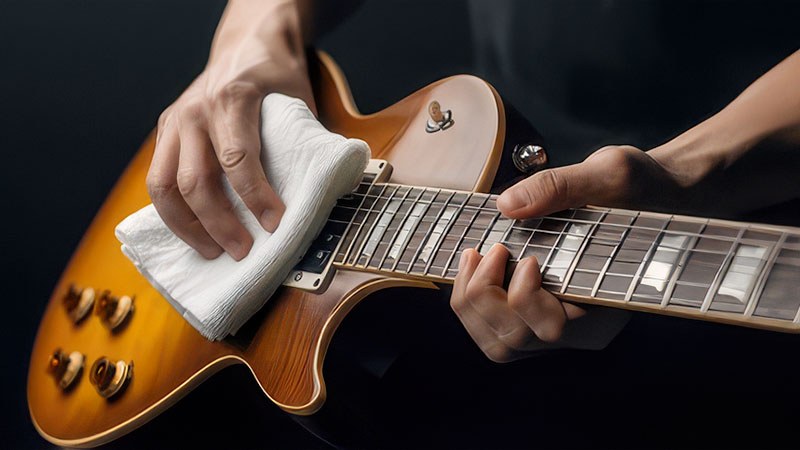
3. A Safe Guitar Polish and Cleaner
Not every cleaner belongs on a guitar. The right polish keeps the instrument looking great without damaging the finish.
- Why it matters: Household cleaners can contain solvents that haze or soften finishes. Proper guitar products remove fingerprints and light grime safely.
- Finish matters: Nitrocellulose lacquer, polyurethane, satin, and oil finishes can require different care.
What to buy
- A guitar-specific cleaner/polish from a reputable brand.
- A separate set of microfiber cloths dedicated to cleaning and polishing.
How to do it
- Dust first with a dry cloth or soft brush.
- Apply a small amount of polish to the cloth, not directly on the guitar.
- Wipe gently in small sections, then buff with a clean part of the cloth.
Final Thought
Good guitar care is not about obsessing over every smudge. It is about controlling the environment, keeping contact surfaces clean, and using products designed for instruments. Invest in these three essentials, build a quick routine, and your guitar will reward you with better playability, more consistent tuning, and fewer surprises over time.